
Behavior Frontiers Announces Groundbreaking Clinical Outcomes Data!
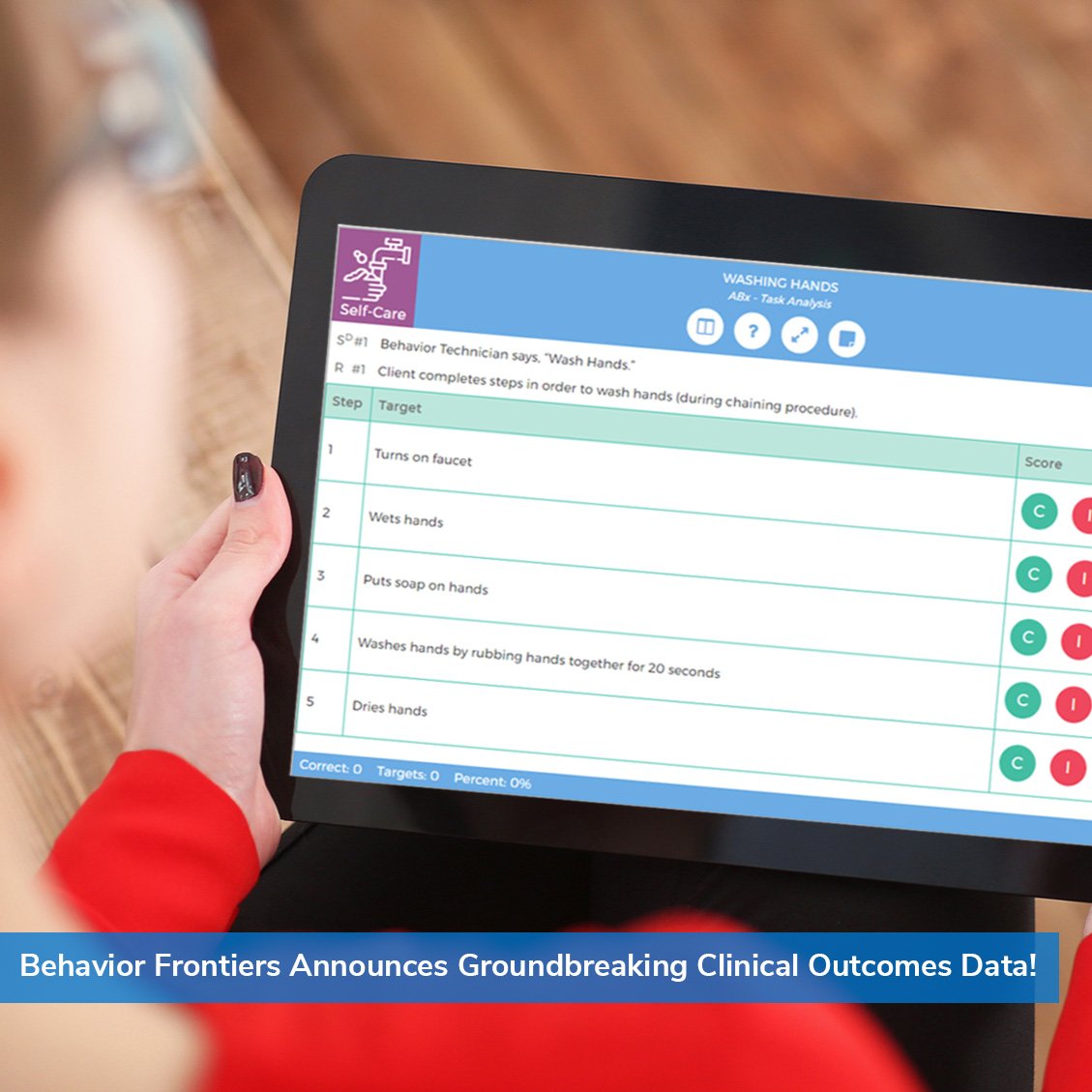
In the field of ABA, the majority of providers have collected data on client progress. This data is able to show progress on individual client goals, skills acquired, and problem behaviors reduced. However, none of these providers have developed a comprehensive way to report clinical outcomes from that data. That is, until now! We are pleased to announce that Behavior Frontiers is leading the way in perfecting ABA treatment for individuals with autism through the launch of our cutting-edge Clinical Outcomes data analysis though our proprietary data-collection platform, PrioraCare.
Behavior Frontiers can now easily report company-wide, clinical outcome data on the reduction of problem behaviors, both in total and specifically for different challenging behaviors, such as tantrums, aggression, and non-compliance. We also have clinical outcome reporting on the number of new skills learned or mastered in total and across developmental domains, such as communication, social, play, and self-care skills. Behavior Frontiers also has the ability to report on clinical outcome data related to our client’s improvement on standardized and criterion-referenced assessments.
Having the ability to report on these clinical outcome measures is an incredible achievement and will be critical to the continued perfection of best practices in Behavior Frontiers’ ABA treatment. Our software is sophisticated and can filter the data on the most important variables to determine what contributes to best outcomes and clinical effectiveness. Our cutting-edge outcomes software can filter on client, age, diagnosis, intervention method used, data collection method used, number of treatment hours received, length of treatment, date of treatment onset, and more!
We have also launched a new clinical outcomes dashboard for client families through the customized parent portal. Parents and caregivers now have access to a wealth of information on their child’s progress, including percentage of progress toward mastery of the overall treatment program, skills acquired each week or month, and speed to gain new skills in order to project length of total treatment time. Furthermore, parents and supervisors now have access to outcome data on the number of learning opportunities presented by clinicians to their child per treatment session, day, week, or month.
Behavior Frontiers is thrilled to announce the results of our first-of-its kind electronic, clinical outcomes software module. On a highly utilized assessment, the Verbal Behavior Milestones Assessment and Placement Program (VB-MAPP), Behavior Frontiers’ clients showed a 48% improvement after approximately 6 months, a 76% improvement after approximately one year, a 109% improvement after approximately 18 months, and a 141% improvement after approximately two years of ABA treatment. With regard to severe problem behaviors, Behavior Frontiers’ clients showed a 37% average reduction after 3 months of treatment, a 46% average reduction after 7 months of treatment, and a 60% average reduction after 11 months of treatment. As for mastery of new skills, Behavior Frontiers clients learned an average of 15 new skills per month, including learning an average of 9 new communication skills and an average of 4 new social skills per month.
With this ground-breaking achievement in the field of ABA treatment, we continue to prove that Behavior Frontiers is leading the way in high-quality ABA services. In treating children with autism, it is crucial that providers measure progress toward goals and analyze both individual and company-wide clinical outcomes in order to ensure that improvements and refinements can be made to promote best practices and best clinical outcomes for clients. Behavior Frontiers is now able to analyze the variables that are associated with optimal performance and then make continued refinements over time with the goal of perfecting ABA treatment for individuals with autism. The combination of our custom curriculum, trainings, and treatment protocols, with never-before-seen visibility into the variables associated with quality outcomes, means that we are truly able to deliver superior care to our clients and help them to achieve a world without limits!
